
|
Interview
|
Interview
Creating new original concepts from scratch for every new trend is an expensive and resource-intensive task. In today's dynamically developing iGaming industry, building and expanding game universes has become a far more flexible and strategic alternative. It allows developers to carefully adapt proven mechanics to the evolving needs of operators and players alike.
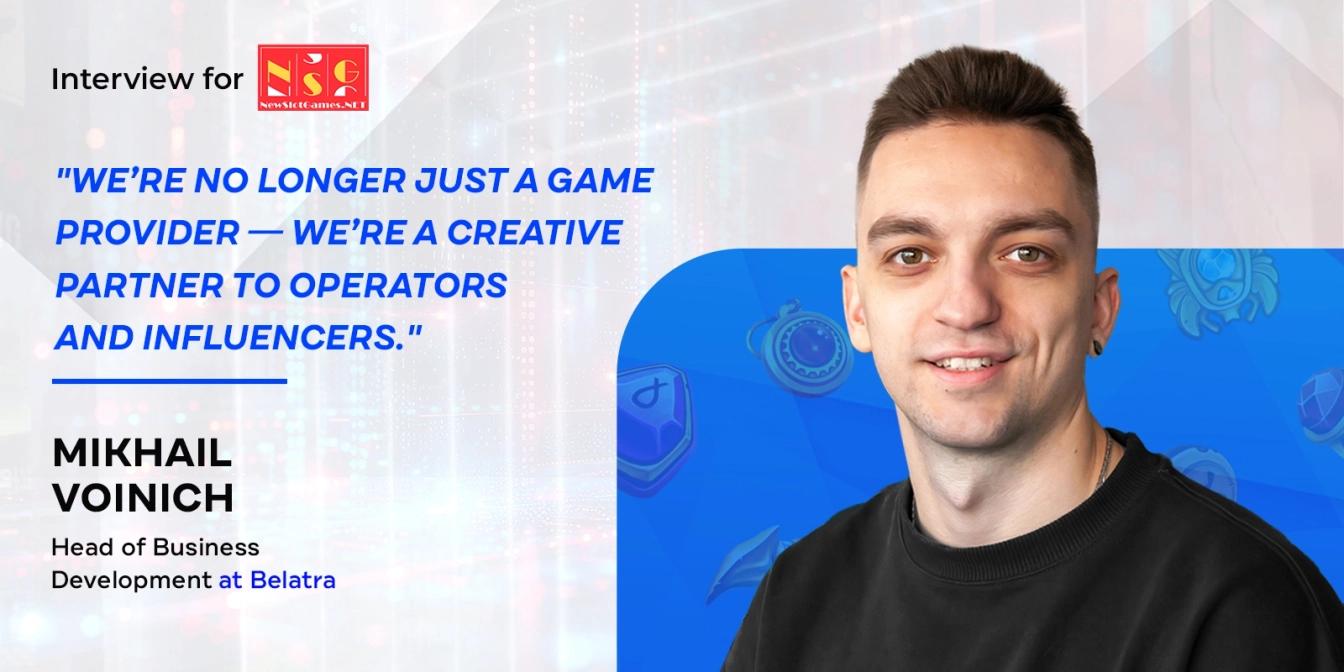
Recently, Ivan Shlapunov, our Key Business Development Manager at Belatra Games, sat down for an in-depth interview with G3 Media to discuss the economics of sequels, original IP development, and how expanding game universes shapes our product philosophy.
Evaluating whether a slot can grow into a full series isn't as simple as checking its first-week figures. Initial stats are often inflated by active marketing and prominent homepage placement. Ivan highlights that true franchise potential becomes clear only over time. When a game maintains strong traffic and stable activity for years, it proves that the interest goes deeper than initial curiosity and that the concept can support further expansion.
While market studies often claim that players demand constant novelty, real-world data paints a different picture. Gamers like testing fresh features, but once their initial curiosity is satisfied, they usually return to mechanics they already know and trust. Ivan notes that developers shouldn't stop innovating, but rather change how new ideas are delivered. Instead of rebuilding a title from scratch, fresh mechanics work best when integrated into an already trusted setup. A recognizable character gets the initial click, but top-notch execution keeps players coming back.
The sequel economy isn't about taking quick shortcuts; it's a practical way to manage commercial risk in an unpredictable market. Developing brand-new slots for every short-lived trend is costly and unpredictable. Expanding strong, proprietary IPs gives studios like ours a flexible foundation—allowing us to update proven, beloved concepts to match modern player preferences while controlling production risks and maintaining consistent quality.
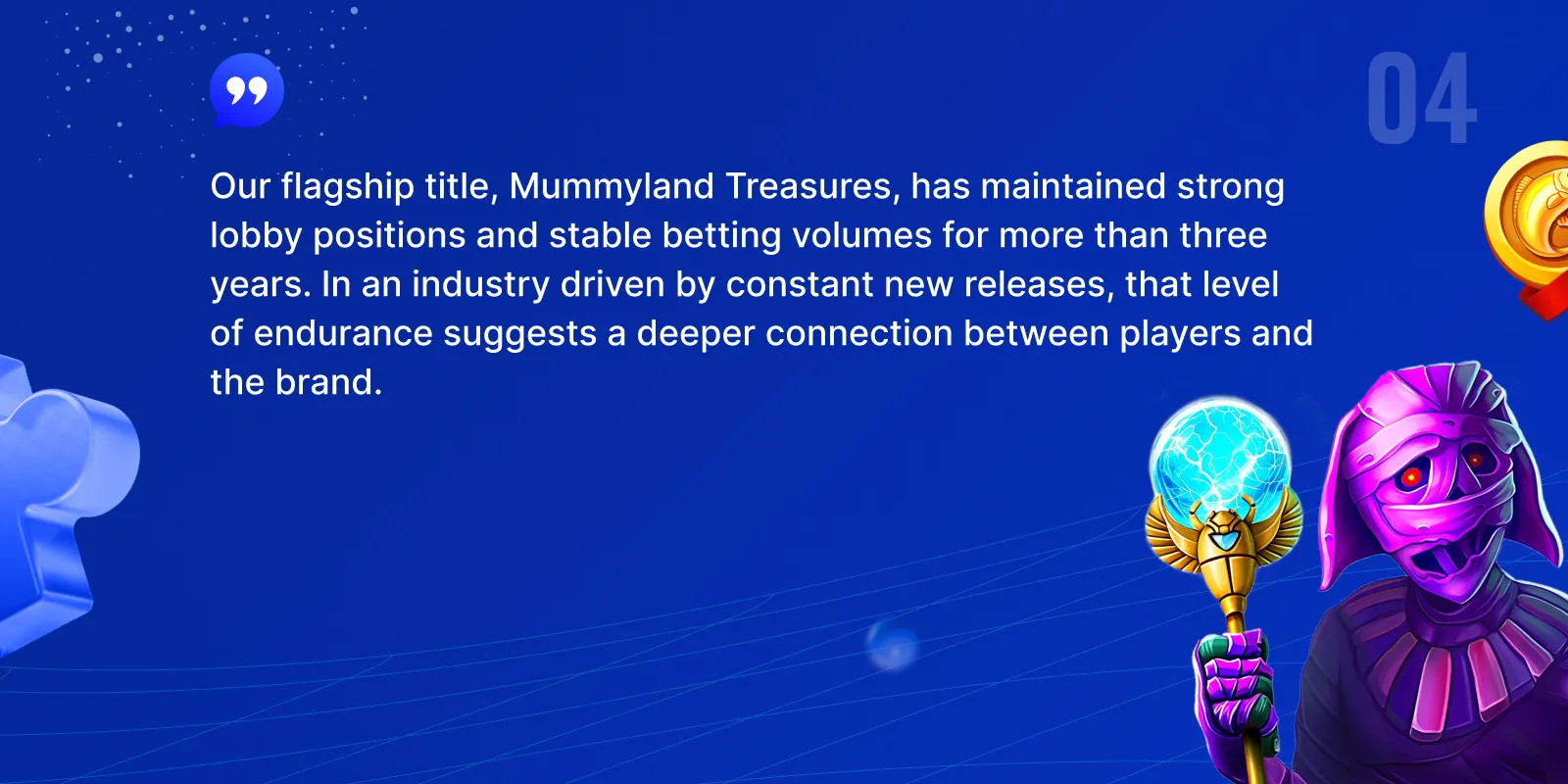
A great example of this approach from our portfolio is Mummyland Treasures. The slot has consistently remained a player favorite and held top positions in casino lobbies for over three years. Seeing how strongly the audience connected with the character and environment, we expanded the idea into a whole series—the Mummyverse. This included seasonal variations like Santa Mummy, instant games such as Mummy's Mines, and classic formats like Fortune Mummy, ultimately turning the Mummy into our official global mascot.
Creating a follow-up title presents a unique set of challenges compared to launching a new game. Completely new releases start without expectations and must gain attention from zero. Sequels, however, get instant recognition, but users naturally compare them to previous versions—evaluating changes in math, rhythm, and visuals. The goal is to strike a balance: adding fresh features while preserving the core identity that made the original release a hit.
Not every successful game can be turned into a franchise. Minimalist slots or classic fruit machines often lack the storytelling potential or character depth needed for a series, making any attempt at a sequel feel forced. Ivan emphasizes that long-lasting franchises require flexible worlds and versatile characters capable of evolving into new formats, themes, and mechanics over time.
|
Interview